


Material Matters – Part 2: 9 Unexpected Interior Finishes That Make Familiar Materials Feel New
From seamless microcement and sculptural terracotta to liquid metal cabinetry and timber wallpaper, we’re exploring nine more materials that bring something unexpected to contemporary interiors.
Welcome back to Material Matters, where we explore the materials that make an interior feel a little more interesting, individual and considered.
In Part One, we looked beyond the usual stone, timber and tile selections to explore nine beautiful and sometimes unexpected materials.
From the rich, irregular glaze of volcanic lava stone and the earthy warmth of rammed earth, to patinated metals, textured glass and charred timber. We also explored the softness of tadelakt, the drama of backlit stone, the surprising versatility of cork and the sculptural beauty of carved stone.
What I love about these materials isn’t simply that they’re different. It’s how they can change the way a room feels – introducing warmth, depth, texture or a subtle point of interest you might not immediately notice, but would certainly miss if it weren’t there.
For Part Two, I’m taking a slightly different approach.
This time, we’re looking at materials that challenge how we use familiar surfaces. Think walls without obvious joins, stone that bends around curves, timber thin enough to be applied almost like wallpaper, and cabinetry that appears to be made from solid metal.
Some of these materials have been around for centuries. Others use newer techniques to achieve something that would once have been difficult, impractical or prohibitively expensive.
As always, I’ll explain what each material actually is, why I find it interesting, where I’d consider using it and the details worth understanding before including it in your own home.
Because when you’re planning a renovation, the most exciting material isn’t necessarily the one you’ve never heard of. Sometimes it’s something familiar, used in a way you hadn’t considered.
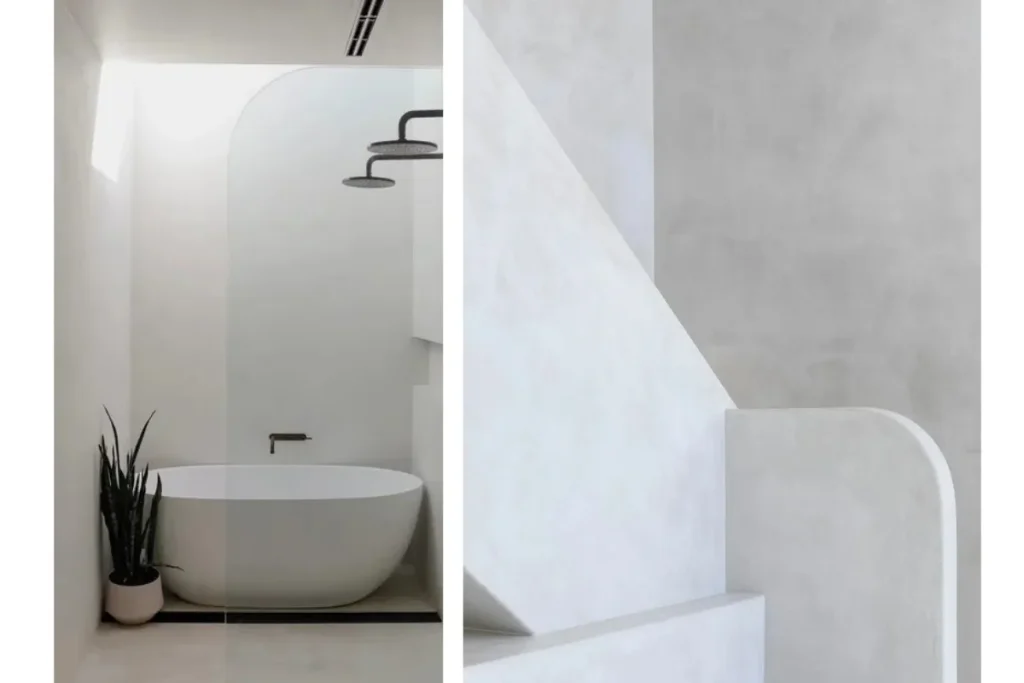
1. Microcement: the appeal of an almost continuous surface
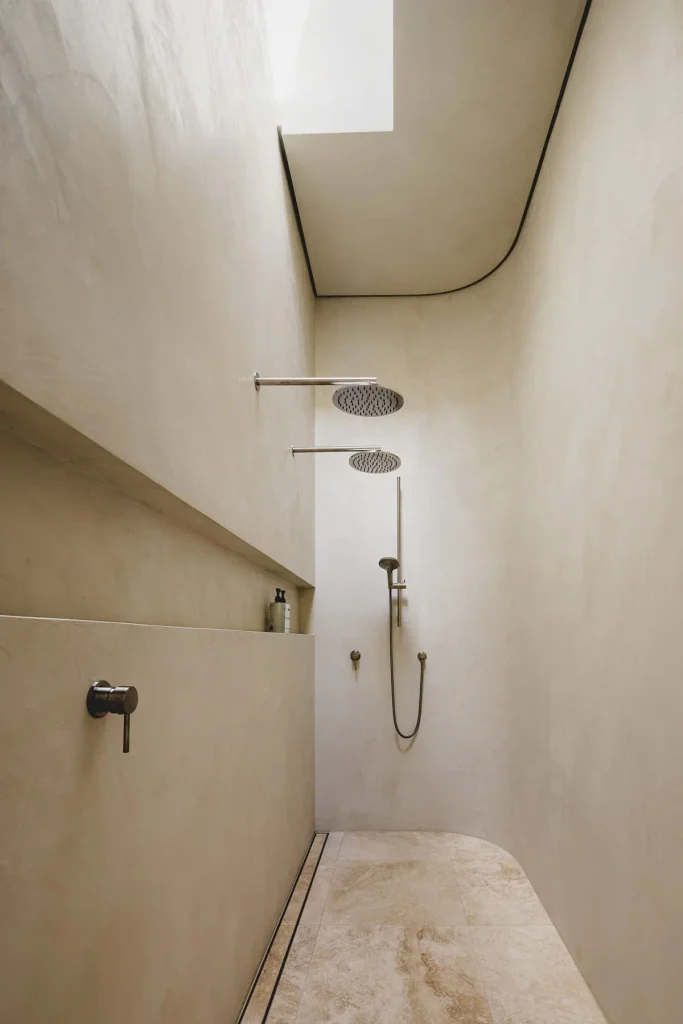
Microcement is a thin decorative coating made from cement-based materials, fine aggregates, polymers and pigments. It’s applied in multiple layers over a suitably prepared substrate to create a smooth, contemporary finish.
What I love about microcement is its restraint.
There are no obvious tile grids interrupting the surface, and the gentle tonal variation gives it a softness that conventional concrete doesn’t always have.
In a bathroom, it can make the walls, built-in seating and other architectural elements feel as though they’ve been formed from one material.
And because it can be applied over certain existing surfaces, it’s sometimes considered during renovations where removing every existing finish may not be desirable.
Where I’d use it: Bathrooms, powder rooms, sculptural walls, curved architectural features or floors where a continuous appearance is an important part of the design.
I particularly like microcement alongside natural timber, warm brushed metals and stone with subtle veining. It creates a beautiful sense of calm while allowing other details to stand out.
What I’d consider: The biggest misconception about microcement is that having fewer visible joints automatically makes a surface easier to maintain or waterproof.
It doesn’t.
The performance depends on the substrate, application system, waterproofing, protective sealer and movement detailing. Cracks or movement in the underlying surface can affect the finish, and repairs may remain visible because of its natural tonal variation.
In a bathroom renovation, I would always want the waterproofing and microcement systems considered together from the beginning, with suitability for the specific wet-area application confirmed by the manufacturer and installer.
A beautiful continuous surface still needs properly designed construction beneath it.
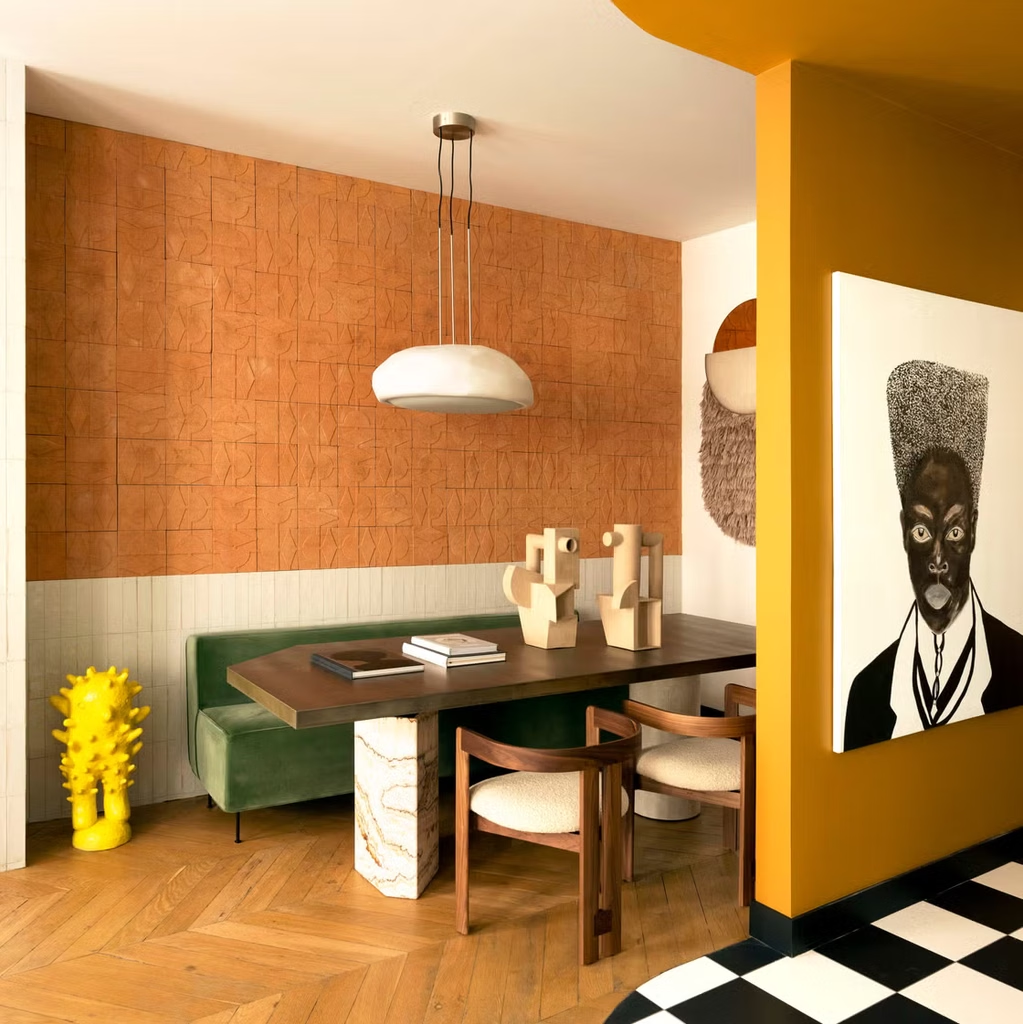
2. Terracotta: a traditional material with a surprisingly modern side
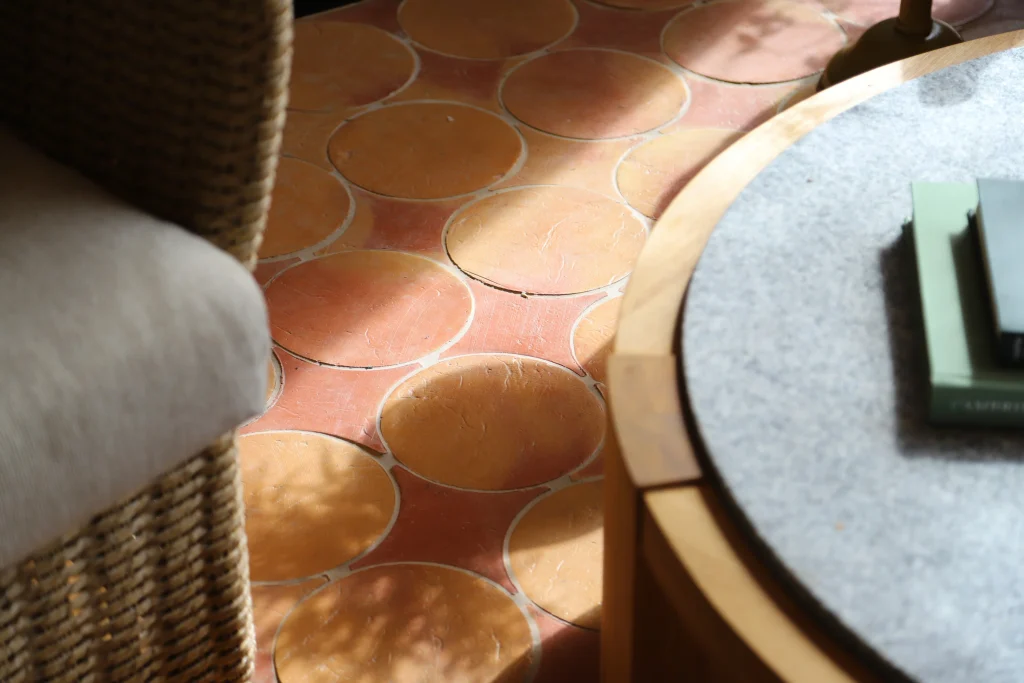
Terracotta is clay that’s shaped and fired, giving it that distinctive earthy character.
Most people associate it with traditional Mediterranean floor tiles, but contemporary terracotta is far more interesting than that.
It can be formed into sculptural wall tiles, architectural screens, ribbed surfaces, handmade mosaics and beautifully irregular decorative elements.
The colours extend well beyond the familiar orange-red too – think dusty pink, chocolate, tobacco, sand and softly muted clay tones.
What I find particularly appealing is that terracotta introduces warmth through the material itself, rather than relying on paint or decorative accessories.
Where I’d use it: A feature wall, kitchen splashback, sheltered outdoor entertaining area, fireplace surround or architectural screening.
For a contemporary coastal home, I love the idea of terracotta in a muted earthy tone paired with pale limestone and beautifully simple timber joinery.
It introduces another layer of colour without making the space feel overly decorated.
What I’d consider: The word terracotta doesn’t tell you everything about how a product will perform.
Traditional unglazed terracotta can be porous, while more contemporary products may have different manufacturing methods, finishes and levels of resistance to moisture or staining.
I’d want to understand the product’s absorption, sealing requirements, slip resistance and cleaning recommendations before specifying it.
And in a coastal home, any external application needs to be assessed for the specific exposure conditions.
The beautiful variation that gives terracotta its character can also make it difficult to achieve a perfectly uniform installation – something I’d discuss with clients before the tiles arrive on site.
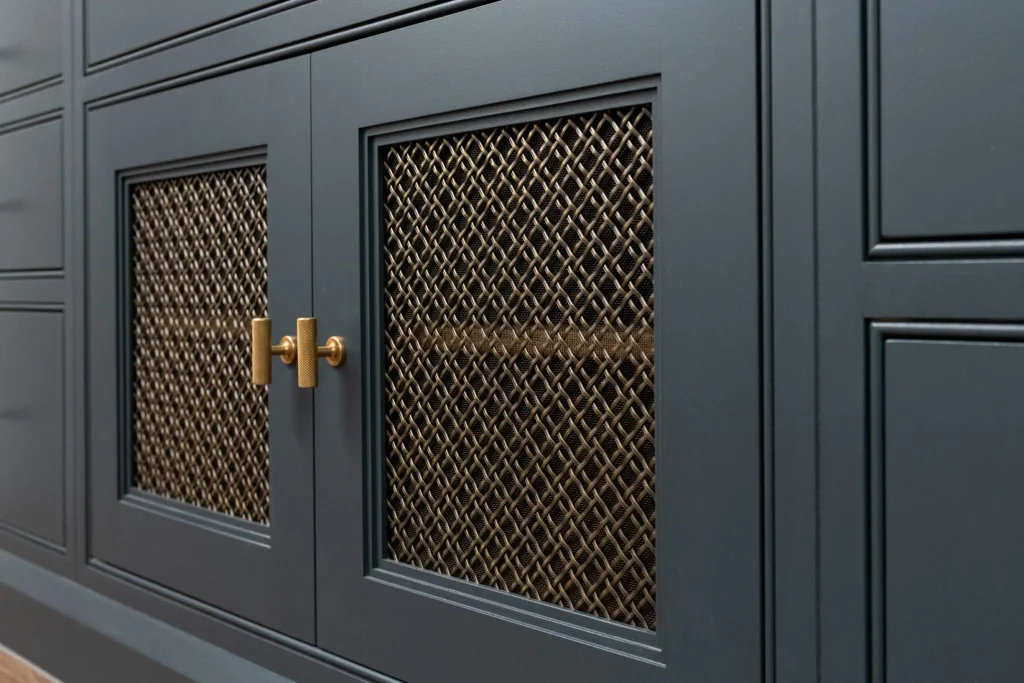
3. Woven metal and architectural mesh: creating something beautiful without closing it off
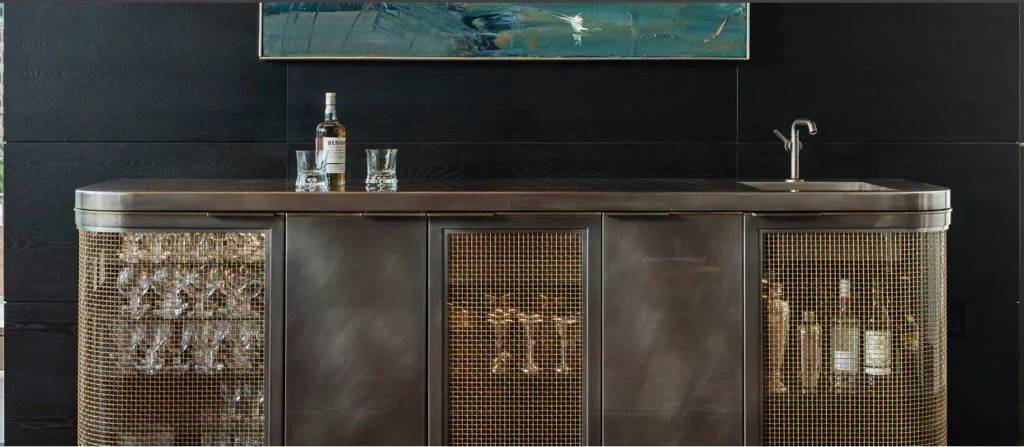
Architectural mesh is made by weaving or assembling metal wires, rods or strips into a decorative surface.
Depending on the material and weave, the effect can range from a very fine, almost fabric-like texture to something bold and architectural.
What makes it interesting is its transparency.
A solid cabinet door conceals what’s behind it, while glass puts everything on display. Woven metal sits somewhere between the two.
It creates a sense of separation without completely blocking the view.
And when light moves across the surface, the metal weave can produce beautiful shadows and subtle reflections.
Where I’d use it: Custom cabinetry, drinks cabinets, wine storage, decorative screens, room dividers or open shelving.
I particularly love a fine bronze mesh set into dark timber cabinet doors.
It allows a glimpse of the contents without requiring everything inside to be perfectly arranged – something I think anyone with a busy household can appreciate!
It’s also an interesting alternative to glass-fronted cabinetry when you want a softer, more layered appearance or something a little more classically designed.
What I’d consider: The success of architectural mesh is often determined by the surrounding detail rather than the mesh itself.
How are the edges finished? How is it secured within the joinery? Could it rattle when the doors close? Does the weave have openings large enough to collect dust or catch fingers?
I’d also look at corrosion resistance, particularly in Sydney’s coastal suburbs where salt-laden air can be hard on certain metals.
Choosing the appropriate metal, finish and maintenance regime matters just as much as choosing a beautiful weave.
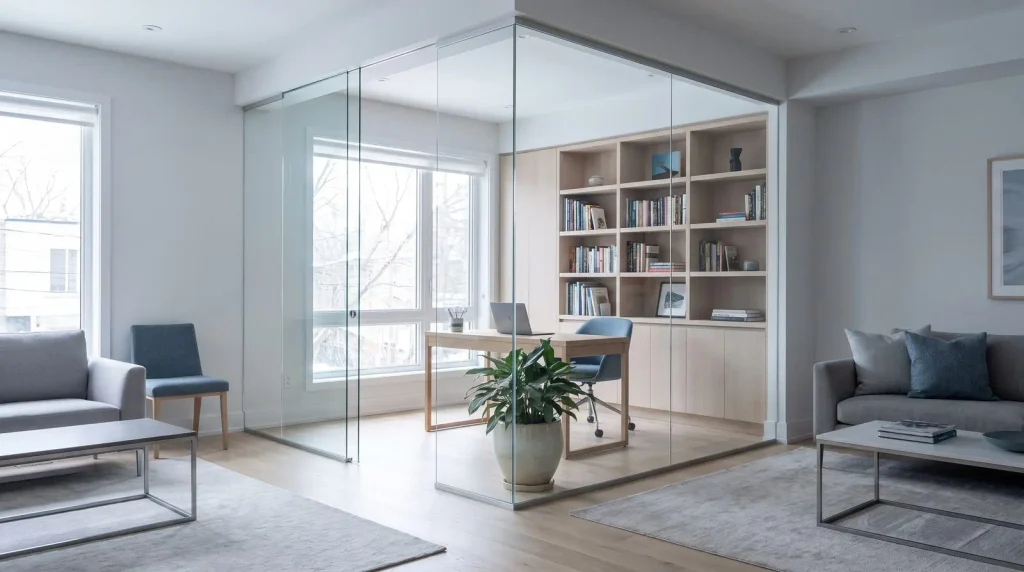
4. Switchable privacy glass: a room that changes when you need it to
Switchable privacy glass can change between a clear and an obscured appearance when an electrical control is activated.
One common technology is PDLC, or polymer-dispersed liquid crystal, which uses a special layer within the glazing system to alter how light is scattered.
In simple terms, the glass can appear clear when you want openness, and frosted when you want privacy.
I find this particularly interesting because it introduces flexibility into something that would traditionally be a fixed design decision.
A wall is a wall. A clear glass partition is always transparent.
But switchable glass allows the same surface to serve different purposes at different times.
Where I’d use it: A home office, internal partition, bedroom-to-ensuite separation or a room that needs to feel connected to the rest of the home without always being visually open.
Imagine a home office opening onto a living area.
During the day, the glazing allows light and views through the space. When you’re working or taking a video call, you can change the glass to provide visual separation without closing a door or drawing curtains.
It’s a very interesting option for homes where spaces need to work harder.
What I’d consider: Frosted doesn’t necessarily mean completely private.
Depending on the product, lighting and distance from the glass, silhouettes may still be visible.
It’s also important to understand that switchable glass isn’t the same as blackout glass. It can obscure visibility while still transmitting a significant amount of light.
Electrical connections, controls, replacement access and what happens during a power failure all need to be resolved early.
And for bathrooms, I’d want to confirm the selected system meets the applicable glazing and electrical requirements.
I’d never specify a product like this without seeing it operate in person.
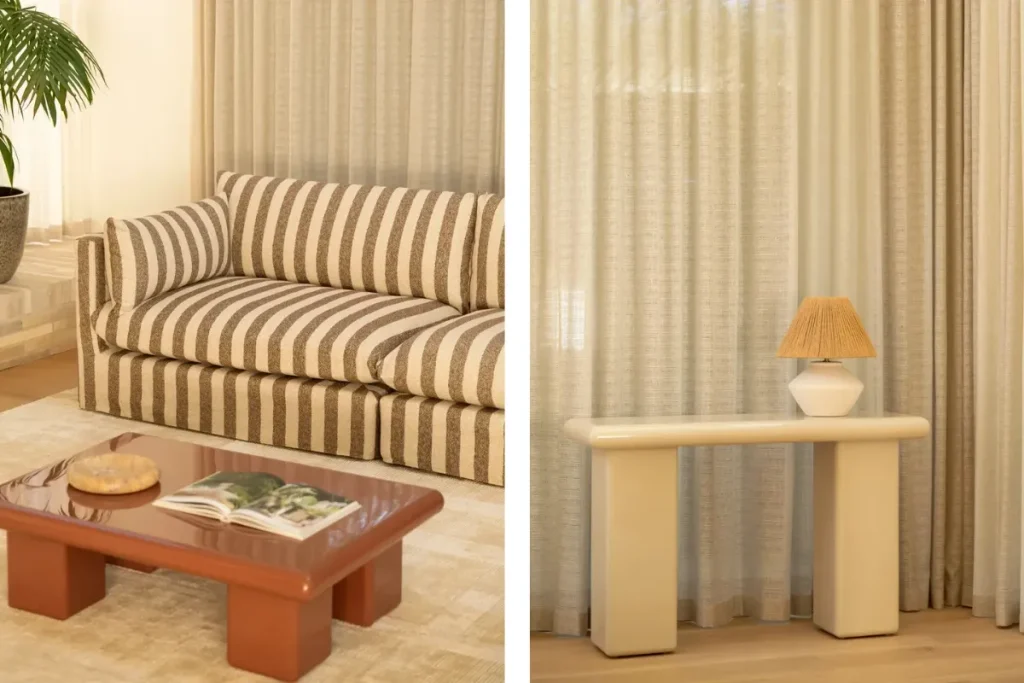
5. Lacquer: colour with extraordinary depth
Lacquer is having a moment right now, and I can see why. It’s a decorative finishing system that can be applied to furniture, cabinetry and other carefully prepared surfaces.
It can create anything from a soft matte appearance to a rich, reflective high-gloss finish.
While we’re accustomed to using colour through painted cabinetry, lacquer can make colour feel quite different.
With a beautifully executed gloss finish, light travels across the surface and reflects elements of the surrounding room.
The result can be wonderfully rich, particularly in deeper colours.
Think aubergine, oxblood, chocolate, forest green or a beautifully warm tobacco tone.
Where I’d use it: A drinks cabinet, decorative console or coffee table, a built-in bar, custom desk or a smaller section of kitchen cabinetry.
I particularly love the idea of a high-gloss chocolate lacquer cabinet set against pale stone and warm timber.
Rather than introducing a complicated shape or decorative profile, the finish itself becomes the detail.
What I’d consider: High-gloss lacquer can be unforgiving.
Surface preparation needs to be excellent, because irregularities in the substrate may become much more noticeable once the finish is applied.
Fingerprints, scratches and repairs are also worth considering, especially in areas with constant use.
And not all products described as lacquer have the same durability or finishing process.
I’d want to understand the exact system being proposed, how easily it can be repaired, and whether the client is comfortable with the maintenance it requires.
Sometimes a softer satin finish gives you much of the richness with fewer practical concerns.
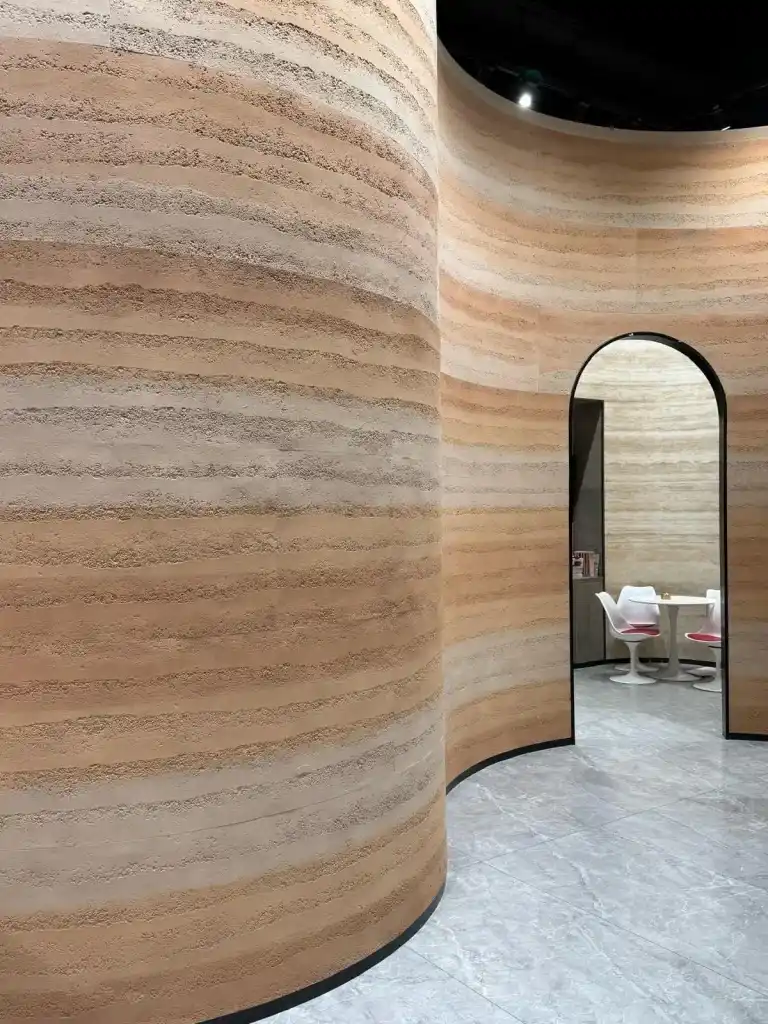
6. Flexible stone veneer: natural stone without the usual bulk
Flexible stone veneer is made by bonding a very thin layer of natural stone to a flexible backing.
The result is a lightweight sheet that retains the appearance and surface character of stone without the thickness and weight of a conventional slab.
There are also flexible stone-look panels made from mineral composites, so it’s important to distinguish the two.
What makes this material interesting is the possibility of using stone in places where a traditional slab would be difficult to accommodate.
A curved wall, for example, can be far more challenging to finish in solid natural stone.
Flexible veneer opens up new design possibilities without necessarily requiring the same structural support.
Where I’d use it: Curved feature walls, decorative panelling, joinery, ceiling details or lightweight architectural elements.
I can imagine a soft, beautifully textured stone veneer wrapping around a curved entrance wall, paired with understated lighting that reveals the surface’s natural variation.
In the right setting, it could feel almost sculptural.
What I’d consider: Flexible stone isn’t simply solid stone made thinner.
The backing, adhesives, installation method and protective finish become important parts of the system.
I would want to understand the minimum bending radius, fire performance, moisture suitability and how the material behaves at corners, edges and junctions.
It’s also important to consider the visual transition between sheets. Poorly planned joins could undermine the continuous stone appearance you’re trying to achieve.
And because these products vary considerably, I’d be cautious about assuming that every flexible stone veneer is suitable for wet areas, kitchens or external applications.
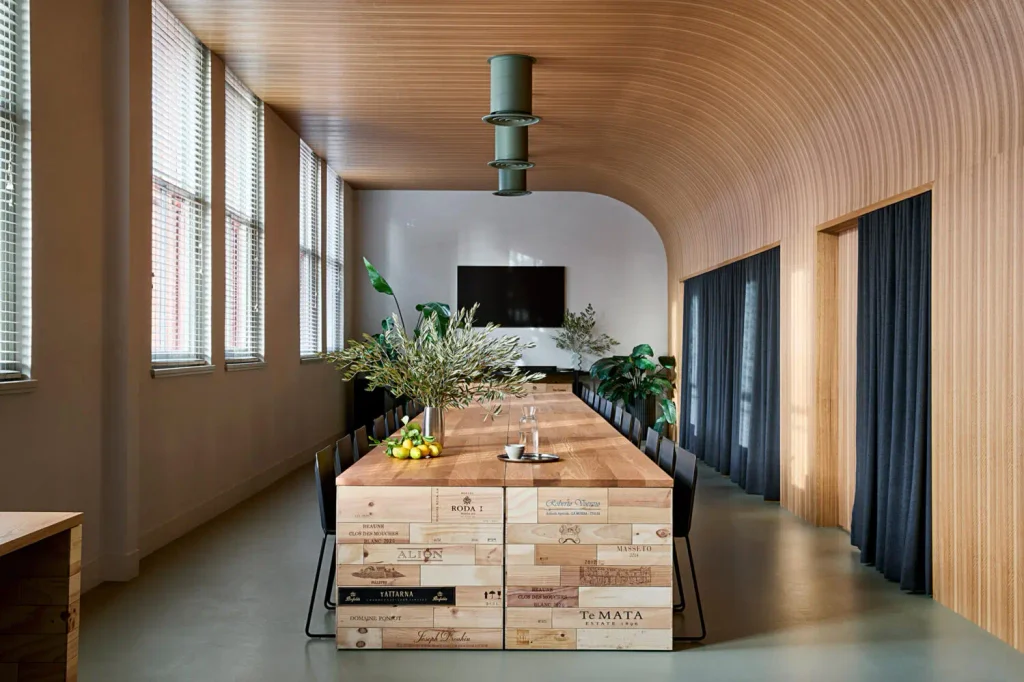
7. Timber veneer wallpaper: timber as part of the architecture
Timber veneer wallpaper sounds a little unusual until you see what it can do.
Rather than using conventional timber panelling, thin sheets of real timber veneer are produced as wallcoverings that can be applied to prepared surfaces.
Products such as Elton Group’s Eveneer WoodWall offer an interesting way to create the warmth of a timber-lined room without the depth of traditional timber boards or joinery panels.
What I love is the opportunity to create a beautifully calm and continuous timber surface.
The grain becomes almost like an architectural fabric, wrapping the room in colour and texture.
Where I’d use it: A study, bedroom, reading nook, hallway, curved ceiling or wall detail.
I particularly like the idea of timber veneer wallcovering in a home office, perhaps combined with a built-in desk and warm, carefully positioned lighting.
The entire space could feel quietly enveloping without requiring lots of decorative elements.
What I’d consider: The installation needs to be resolved just as carefully as the veneer itself.
With a very thin real-timber surface, the preparation of the substrate is particularly important.
I’d also look carefully at how the sheets meet, how the timber grain continues around corners, and how the material is finished at doorframes and cabinetry.
Timber grain has a natural direction, and if that’s ignored, a beautifully simple room can suddenly feel quite busy.
The product’s fire performance, finish, cleanability and suitability for the intended environment should also be confirmed.
For me, this is one of those materials where the most impressive result is often the one where the installation detail almost disappears.
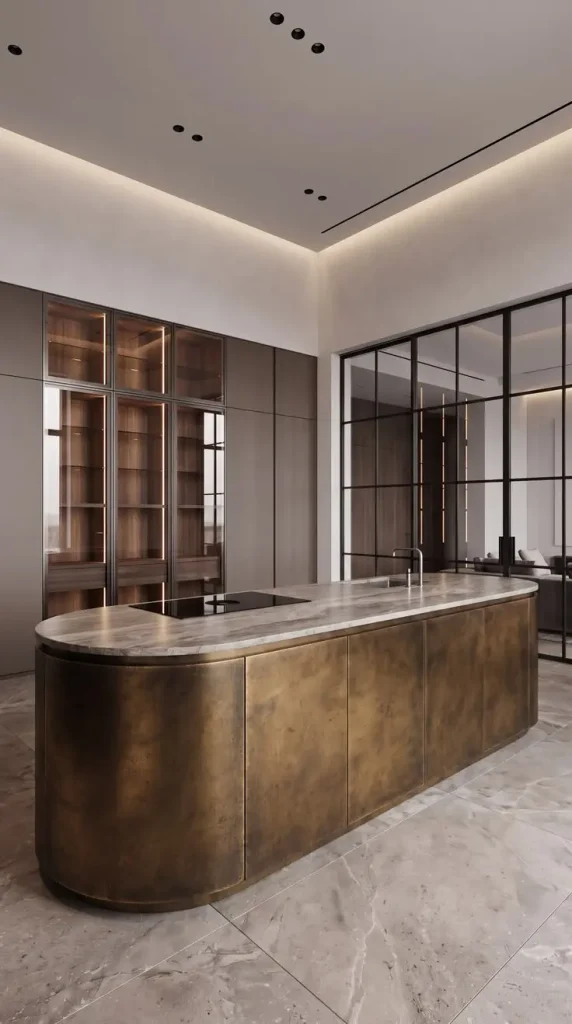
8. Liquid metal cabinetry: when a coating feels like a solid material
Liquid metal finishes are specialist decorative coatings containing real metal particles.
They’re applied to a suitable substrate and then finished using techniques such as polishing, brushing, texturing or patination.
Depending on the product and application, the resulting surface can look remarkably similar to solid bronze, brass, copper or other metals.
What makes it interesting is that the visual weight of the material can be quite different from its physical construction.
A cabinet can appear to have substantial bronze doors without being fabricated entirely from solid metal.
And because the finish can be textured and patinated, it offers far more variation than simply painting something a metallic colour.
Where I’d use it: Custom cabinetry, a kitchen island front, drinks cabinet, decorative wall panel or sculptural furniture piece.
I’d love a beautifully textured bronze liquid metal finish on a bar cabinet, paired with simple walnut joinery and understated chocolate toned stone.
The combination would feel sophisticated without being overly decorative.
What I’d consider: Liquid metal is a finish, not a guarantee of solid-metal performance.
Different systems have different metal content, coating thicknesses, protective finishes and maintenance requirements.
On frequently touched cabinetry, I’d want to understand fingerprint visibility, abrasion resistance, edge durability and repair options.
I would also request a generous sample, not just a small swatch.
A metallic finish can look completely different under natural daylight, warm evening lighting and direct task lighting.
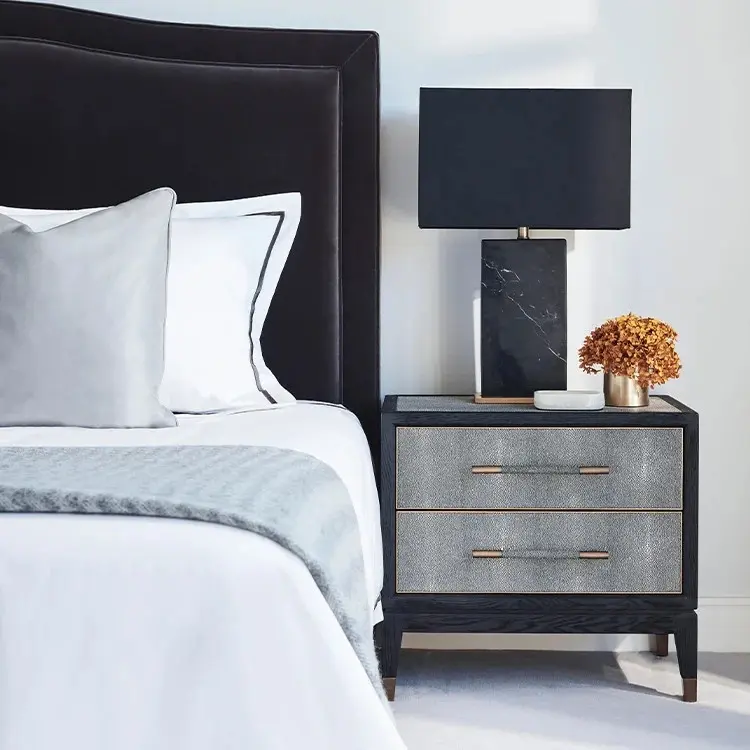
9. Shagreen: an unexpected texture with a long history
Shagreen is traditionally a decorative material traditionally made from stingray skin, valued for its distinctive pebbled texture.
Today, similar finishes can be produced using embossed leather, resin and other synthetic materials.
Its appeal is quite subtle.
From a distance, the surface can almost resemble softly textured stone or leather. Up close, the tightly patterned texture becomes much more apparent.
It’s beautiful precisely because it doesn’t reveal everything at once.
Where I’d use it: A decorative cabinet, console, bedside table, drawer front, jewellery box or smaller piece of custom furniture.
Personally, I’d lean towards a high-quality faux-shagreen finish.
I can imagine it paired with charcoal timber, aged brass or beautifully simple lacquered joinery, where the texture adds interest without introducing another dominant colour.
What I’d consider: Traditional animal-derived shagreen raises important questions about sourcing, species protection and responsible procurement.
For that reason, I’d generally be more interested in contemporary alternatives.
But faux shagreen varies enormously in quality.
Some finishes have a beautiful sense of depth, while others can look overly repetitive or obviously manufactured.
I’d want to see the material in person, particularly across larger surfaces, and understand how the texture will be finished around edges and corners.
Where an unusual finish adds the most value to a renovation
One of the questions I think is worth asking when planning a renovation is this:
Does every material need to be interesting, or does the room simply need one interesting material? For me, it’s usually the latter.
A room doesn’t become more beautiful simply because we’ve introduced more unusual finishes. In fact, too many distinctive surfaces can compete for attention and make an otherwise well-planned interior feel unnecessarily complicated.
What’s more interesting is understanding where a material can make the greatest difference.
A liquid metal finish might be extraordinary on a small drinks cabinet, but overwhelming across an entire kitchen.
Lacquer could bring a wonderful richness to a single piece of joinery, while a more restrained finish might be better suited to the surrounding cabinetry.
And flexible stone veneer may offer a practical solution to a curved wall, rather than simply being chosen because it’s an unusual product.
The difference is whether the material is solving a design problem, creating a particular atmosphere, or just adding another decorative layer.
And let’s not forget the detail behind the detail… There’s another part of material selection that doesn’t always make it into the photographs. It’s the way an unusual finish is constructed and installed.
A beautiful timber veneer wallcovering needs thoughtfully planned joins and grain direction.
A liquid metal cabinet needs properly resolved edges and a finish that will withstand the way it’s used.
A microcement bathroom requires specialist preparation, waterproofing and installation.
And a switchable glass partition needs electrical planning long before the glass is ordered.
These decisions affect everything from the design drawings to the construction programme and final cost. It’s why I believe material selections need to happen as part of the overall renovation design process, rather than being treated as a final decorating exercise.
If you’re interested in how these decisions come together, you can read more about our approach to bespoke renovations and new builds.
Frequently asked questions about unusual interior finishes
Is microcement a good choice for bathrooms?
Microcement can be a beautiful bathroom finish when the correct product, waterproofing system, substrate preparation and installation methods are used.
Its biggest visual advantage is the continuous appearance, but that doesn’t automatically make it more waterproof or easier to maintain than tiles. I’d always assess the proposed product and installation system before recommending it for a wet area.
At around $350 – $450 per square metre, it’s also significantly more expensive than most tiles, so not necessarily the right option for the budget conscious renovator.
What is the difference between liquid metal and metallic paint?
Liquid metal coatings contain actual metal particles and can often be worked, polished or patinated to create a convincing metallic surface.
Metallic paint generally uses pigments to create a metallic appearance. The finish, texture, depth and durability depend on the products involved, so neither should be selected on appearance alone.
Can flexible stone veneer be used in a shower?
Some specialist systems may be suitable for certain wet-area applications, but flexible stone veneer isn’t universally approved for showers.
The backing, adhesive, finish, substrate and waterproofing system all need to be assessed together. Manufacturer approval for the exact application is essential.
What are some alternatives to traditional timber panelling?
Real timber veneer wallcoverings, timber-look decorative panels and specialist timber finishes can provide warmth without the thickness or visual rhythm of conventional timber boards.
The best choice depends on the desired appearance, durability, substrate and how the material will meet surrounding joinery and architectural details.
A final thought: sometimes it’s not the material, but what you do with it
The more materials I discover, the more I appreciate that beautiful design isn’t necessarily about finding something nobody else has used.
It’s about seeing the possibilities in a material and knowing how to use it well.
A traditional clay tile can become a contemporary sculptural surface.
A piece of cabinetry can take on a completely different character through a rich lacquer finish.
And something as familiar as timber can create an entirely new effect when applied as a wallcovering.
That’s what makes material selection such an enjoyable part of the design process.
For me, it’s not about collecting unusual finishes. It’s about creating a home where the materials feel like they genuinely belong – where there’s enough interest to make the space individual, but enough restraint to make it comfortable to live in.
If you’re planning a renovation or new build on Sydney’s Northern Beaches or North Shore, I’d love to help you explore materials that bring something special to your home, while making sure the practical details are just as carefully considered.
Explore our interior design and renovation services, browse our recent projects or get in touch to talk about your plans.
Coming next in Material Matters Pt 3: We’re exploring a different kind of material innovation – surfaces made from discarded timber, recycled textiles, plastic waste and even fungi. Because some of the most interesting developments in interior design start with reconsidering what we throw away.